Language
From Madurai, for Bharat and beyond

Our roots in Madurai

RSL Family Foundation is rooted in Madurai, one of the oldest living cities of India. The city shapes how we work, what we value and why we believe that lasting change must grow from local knowledge, relationships and shared purpose.

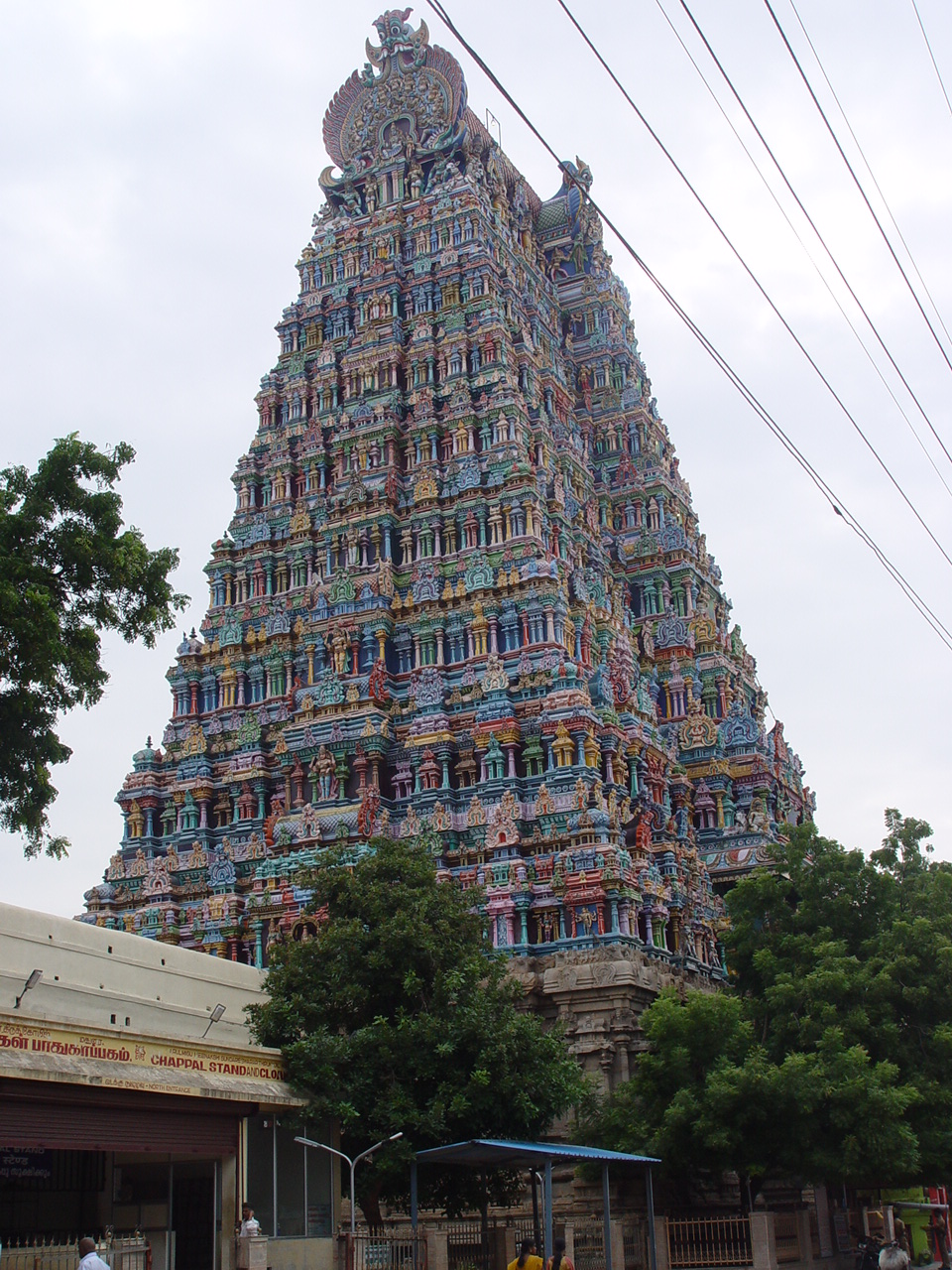
Meenakshi Amman Temple east gopuram, Madurai
East tower of Meenakshi Amman Temple, Madurai © Yasagan, CC BY-SA 3.0
What makes Madurai Madurai

History, culture and everyday life

These are public facts about the city. They are not a complete encyclopedia; they are the things that explain why a foundation working for a fair chance for every person chooses to start here.

One of the oldest living cities

Madurai is counted among the oldest continuously inhabited cities of the Indian subcontinent. It is named after the nectar (madhu) that, in tradition, is said to have fallen from the locks of Shiva. For more than two millennia it has been a centre of Tamil language, temple culture, trade and learning.

Meenakshi Amman Temple

The Meenakshi Amman Temple is at the heart of Madurai. Its fourteen gopurams, including the south tower, are covered with thousands of brightly painted sculptures. The temple is active every day, and its rituals, festivals and processions shape the rhythm of the city around it.

Temple architecture and streets

The old city is laid out in concentric squares around the temple, a pattern that can still be walked today. The streets carry names such as Adi, Chittirai, Avani Moola and Masi, after the Tamil months, and the area preserves narrow lanes, old houses, pillared halls and water tanks.

Tamil learning and literature

Madurai was the seat of the third Sangam, the ancient academies of Tamil poets and scholars. The city remains a place where Tamil is spoken, sung, taught and published. Classical music, folk arts and the annual Chithirai Thiruvizha keep old traditions in daily life.

Food that belongs to Madurai

The city is known for its idiyappam, parotta, kari dosa, jigarthanda and jasmine (madurai malli). These are not tourist labels; they are part of ordinary meals, market stalls, tea shops and family kitchens across the city.

Madurai malli

Madurai jasmine has a Geographical Indication tag. The flowers are grown around the city, sold in tight strings in markets, and used in temples, weddings and hair garlands across South India.

Handloom and handicrafts

The region supports handloom weaving, tie-and-dye work, bronze casting, wood carving and stone carving tied to temple building. Families and small workshops continue these crafts, often linking temple orders, local use and wider markets.

Schools, colleges and research

Madurai has a long reputation for education. It is home to institutions that serve students from across Tamil Nadu and beyond, and it has become a hub for engineering, medical, arts and agricultural colleges as well as for start-ups and small technology firms.

Icons of the city

The things that say Madurai

These are the symbols people recognise. Each one has a real story: how it is made, where it comes from, who keeps it alive, and why it still matters.

Meenakshi Amman Temple east gopuram, Madurai
East tower © Yasagan, CC BY-SA 3.0

Meenakshi Temple

The Meenakshi Amman Temple has more than thirty million visiting feet every year, yet its real life is local. Before sunrise the temple bells begin. Priests open the shrines, flower sellers arrange garlands along the pillars, and the first batch of prasadam is prepared in the kitchen that has fed visitors for centuries.

Fourteen gopurams define the skyline, but the south tower is the one most photographed. Its tiers are crowded with painted gods, guardians, musicians and mythical animals, each figure carrying a story a child in Madurai can usually explain. During Chithirai Thiruvizha the celestial wedding of Meenakshi and Sundareswarar is re-enacted, and the city stops for processions that last through the night.

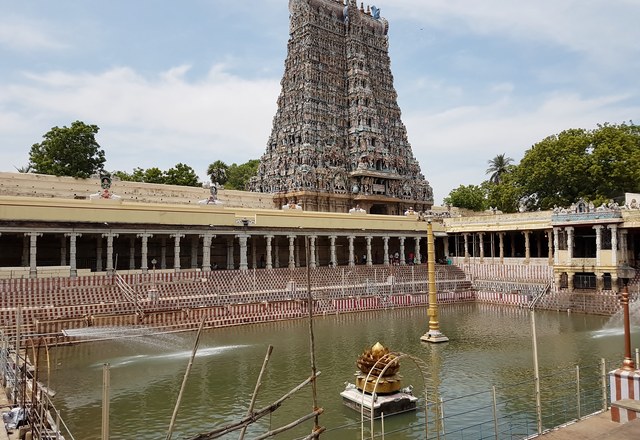
The temple tank, the Pottramaraikulam, sits inside the complex. Its golden lotus is said to be the place where the Tamil sage Thiruvalluvar was tested. Pilgrims, students and families still sit on its steps, and the water reflects the gopurams at dusk.

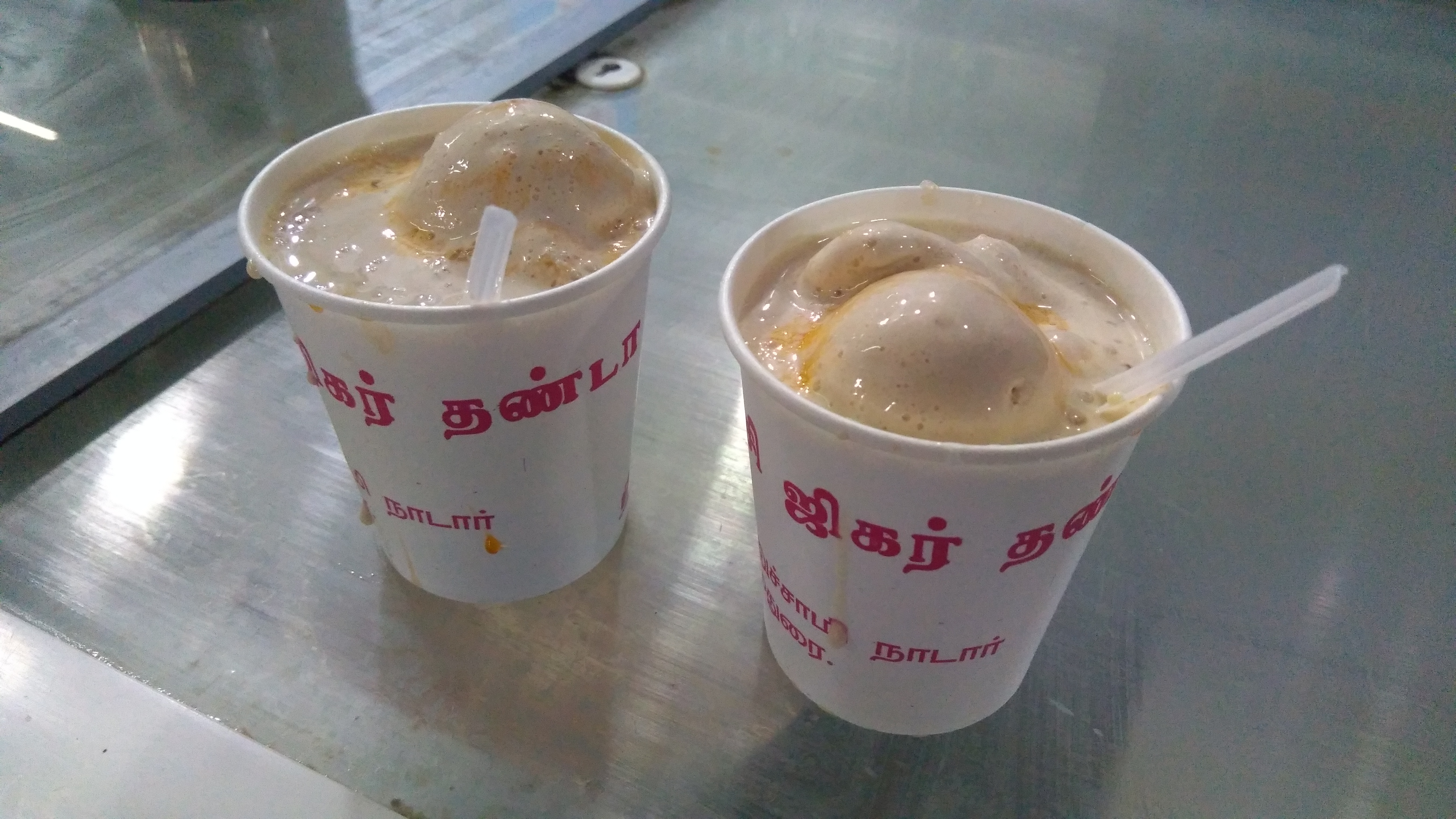
Glass of Madurai jigarthanda
Madurai jigarthanda © Srini297, CC BY-SA 4.0

Jigarthanda

Jigarthanda means 'cool the heart' in Hindustani. In Madurai it is not just a drink; it is a small industry. The classic version is built from four things: reduced milk, almond resin (badam pisin), nannari syrup and ice cream. Vendors have guarded recipes for generations.

The most famous shops sit on East Marret Street, a lane that stays busy until late evening. Customers order by style: plain, special, or loaded with fruit and nuts. A true Madurai jigarthanda is thick enough to eat with a spoon and sweet enough to balance the city's heat.

For RSL the drink is a lesson in local enterprise: a simple recipe, kept excellent by repetition, trusted by word of mouth, and now carried across India by migrants from Madurai.

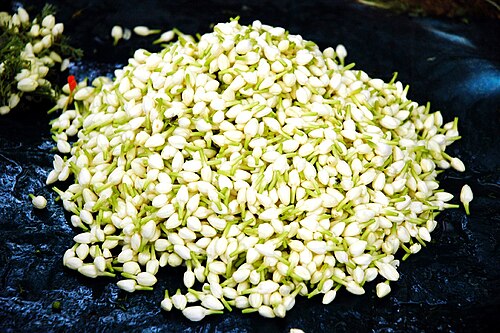
A bunch of Madurai malli jasmine
Madurai malli © எஸ்ஸார், CC BY-SA 3.0

Madurai malli

Madurai malli is a small white jasmine with an unusually strong scent. It was granted a Geographical Indication tag in 2013, recognising that the flower's quality comes from the soil, climate and farming methods around the city.

The vines are grown on small holdings in villages such as Othakadai and Melur. In the early morning women harvest the buds before they open, because a half-open bud is what holds the fragrance longest. The buds are then sold to stringers who sit on street corners and in markets, threading them into tight garlands with deft fingers.

You will find the garlands in brides' hair, around the necks of temple deities, on the dashboards of taxis, and in the hands of returning travellers. For many people, the smell of Madurai malli is the smell of home.

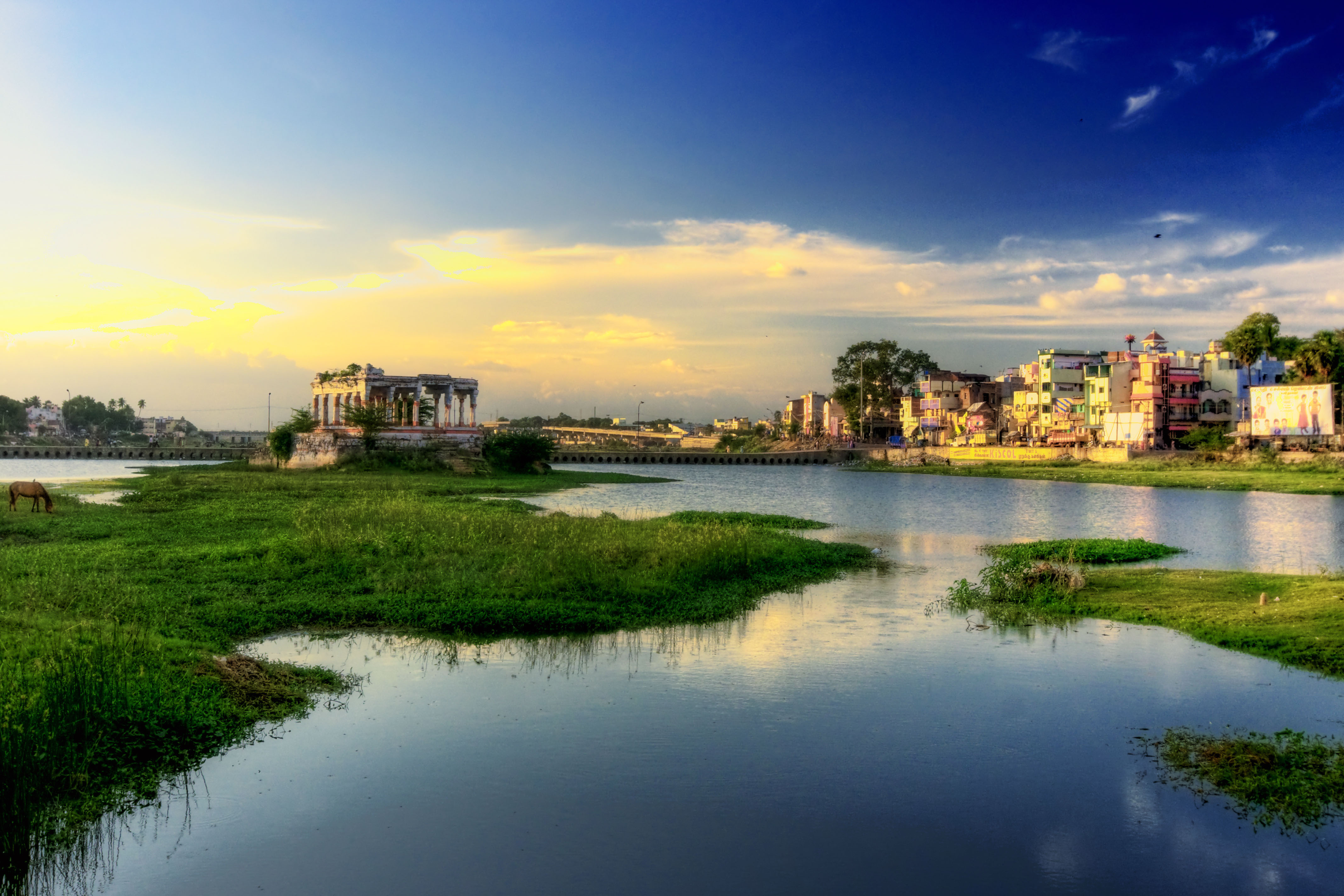
Sunrise over the Vaigai River in Madurai
Vaigai River sunrise © Paulthy, CC BY 2.0

Vaigai River

The Vaigai runs through Madurai from west to east. It is not a large river, but it is the reason the city exists here. The river feeds tanks and channels that have supported farming on the plains for centuries.

In the monsoon the Vaigai can rise quickly, flooding low areas and filling the Periyar irrigation system. In the dry months it slows to a shallow stream, and children play on its sand banks while cattle graze nearby. The rhythm of the river still sets the rhythm of the harvest.

Bridges, ghats and parks line the riverbanks. The old families of Madurai measure time by the Vaigai: where they walked, where they bathed, where the annual float festival was held, and where the city gathers during floods and festivals.

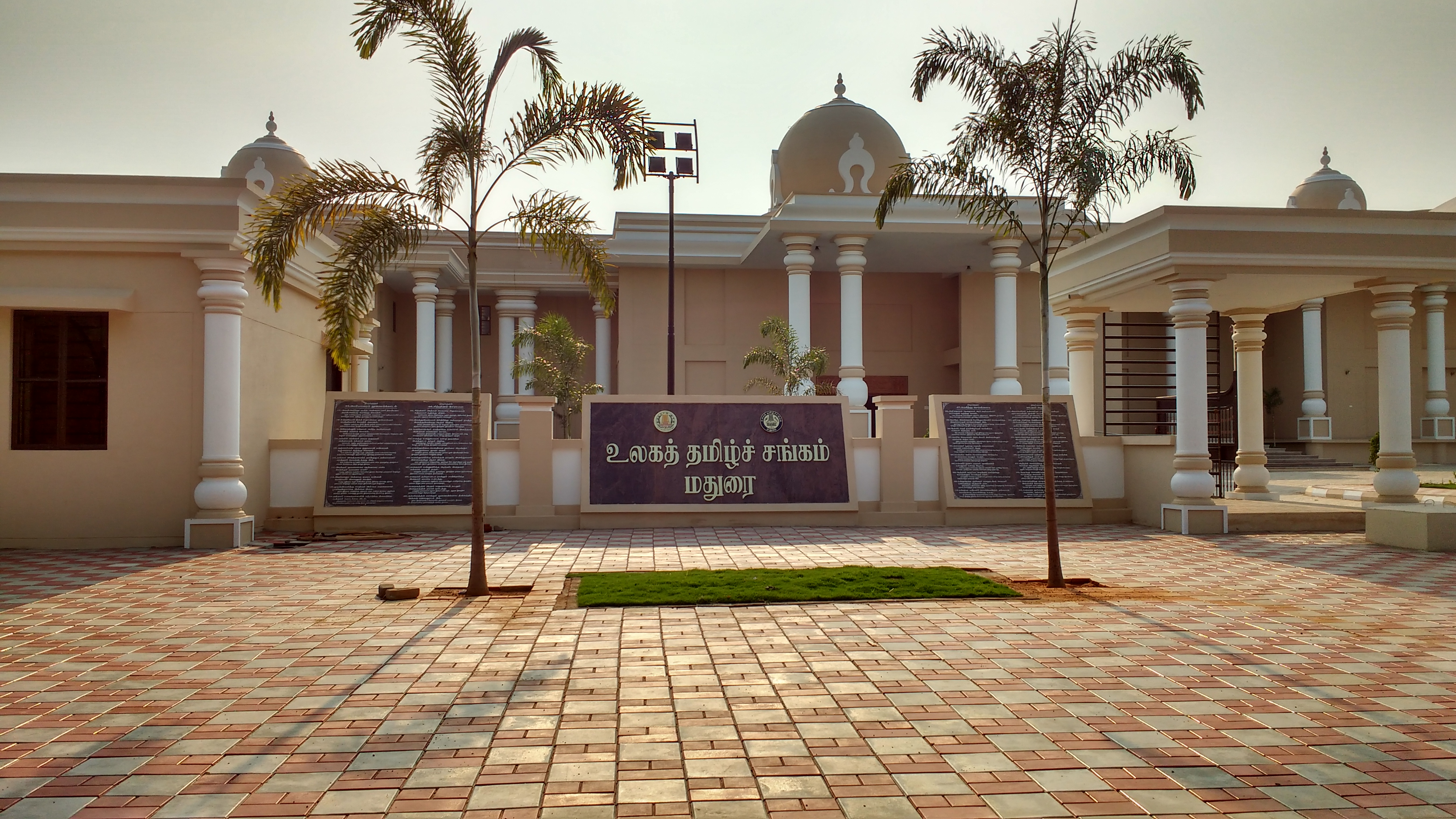
World Tamil Sangam building, Madurai
World Tamil Sangam building © Sumathy1959, CC0

Tamil Sangam

The Sangam was an academy of Tamil poets. Tradition counts three Sangams, and the third was held in Madurai. The city was chosen because it was already a centre of learning, trade and royal patronage.

The poets of the Sangam wrote about love, war, nature, ethics and the lives of ordinary people. Much of what we know about ancient South India comes from these poems. Works such as Silappatikaram and Manimekalai are rooted in Madurai and still studied in schools and universities.

That inheritance is why Tamil is not treated as a heritage language alone in Madurai; it is a living language of science, law, cinema, politics and daily bargaining. RSL's work in education and technology grows out of that confidence in the language.

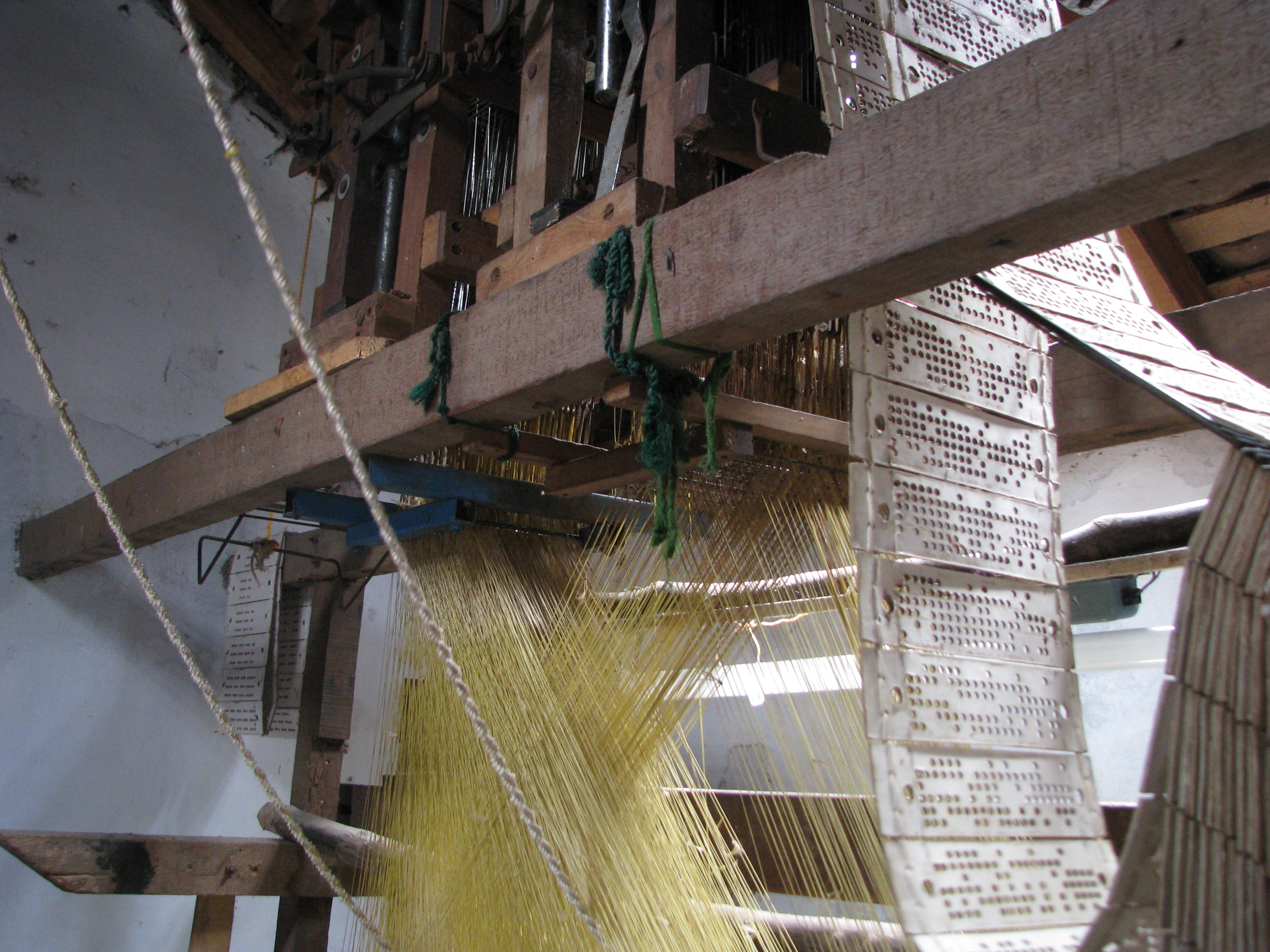
Complicated hand-loom used for silk weaving in Tamil Nadu
Hand-loom © McKay Savage, CC BY 2.0

Handloom weaving

Handloom weaving around Madurai produces cotton sarees, dhotis and fabrics used for daily wear and temple use. The looms are often wooden, pedal-operated, and kept in houses or small workshops in clusters such as Narayanapuram and Sourashtra Colony.

A weaver works from a counted pattern kept in memory, passed from parent to child. The warp is stretched across the loom, the shuttle flies back and forth, and the cloth grows slowly. Designs include temple borders, checks and motifs inspired by local flowers.

The sector faces pressure from power looms and rising cotton prices, but the handloom survives because of quality, tradition and repeat customers. For RSL it is a model of skilled local livelihood that deserves to be supported and modernised.

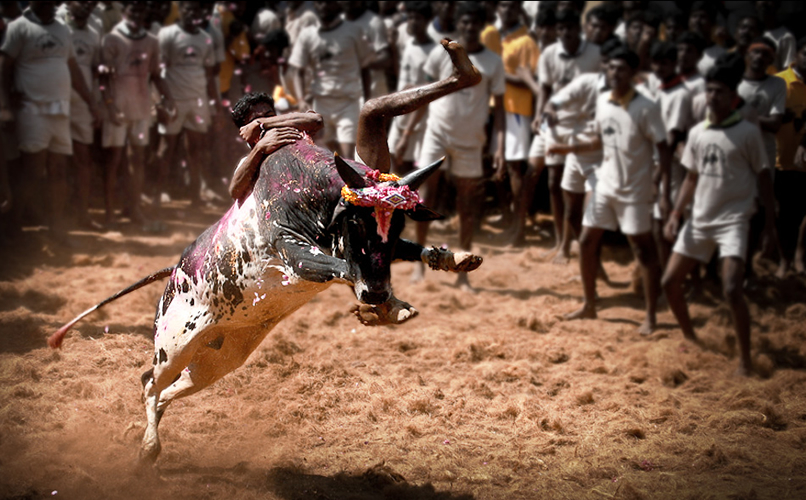
Jallikattu bull-taming sport in Alanganallur, Madurai
Jallikattu at Alanganallur © Iamkarna, CC BY 3.0

Jallikattu

Jallikattu is a bull-taming sport held in villages around Madurai during the Pongal season. Unlike a Spanish bullfight, the bull is not killed; the contest is between a single animal and a crowd of young men who try to hold onto its hump as it charges. The best animals are raised like family members and judged by their strength and temperament.

Alanganallur, near Madurai, is the most famous venue. On the day of the event the village becomes a stadium of packed earth, banners and cheering families. Spectators line the galleries while participants wait their turn in a holding arena called the vaadivasal. Every successful ride is celebrated; every fall is met with concern, because the men and the bulls are known to the community.

The sport is tied to native-breed conservation, rural identity and seasonal harvest pride. For RSL it is a reminder that village traditions are not static folklore; they are living systems of animal care, athletic discipline and collective celebration that can be honoured while raising standards of safety and welfare.

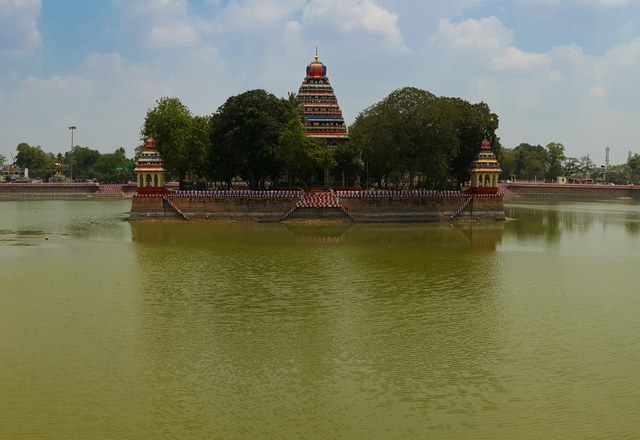
Vandiyur Mariamman Teppakulam temple tank, Madurai
Vandiyur Mariamman Teppakulam © Aravind Sivaraj, CC BY-SA 4.0

Vandiyur Mariamman Teppakulam

About five kilometres east of the temple, Vandiyur Mariamman Teppakulam is one of the largest temple tanks in South India. Built in the seventeenth century, the square tank is fed by the Vaigai through underground channels and held by sloping granite steps on all four sides.

During the Teppam or float festival, the goddess Meenakshi is brought here on a decorated raft and circled around a small mandapam at the centre. For a few nights the water becomes a theatre of lamps, music and thousands of spectators.

The tank is also everyday infrastructure: its channels water fields, its steps are walked by joggers and students, and its scale reminds visitors that Madurai was planned around water as much as around stone.

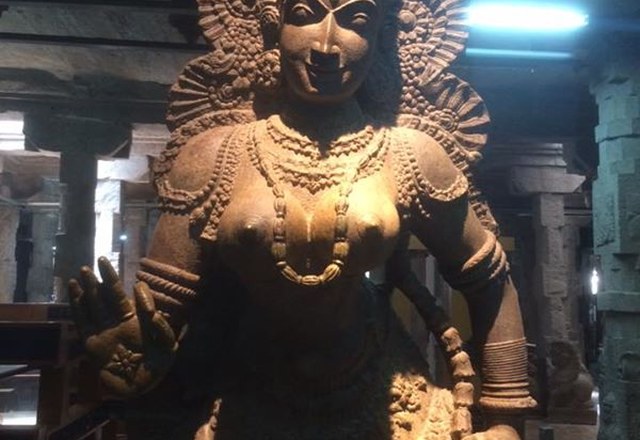
Inside the Thousand Pillar Hall, Meenakshi Amman Temple, Madurai
Inside the Thousand Pillar Hall © ShveataMishra, CC BY-SA 4.0

Thousand Pillar Hall

Inside the Meenakshi Amman Temple complex, the Thousand Pillar Hall was built by the Nayak rulers in the sixteenth century. Each of the carved granite pillars carries a different figure, and the hall once served as a court, a concert space and a coronation venue.

Today it houses the temple museum. Visitors walk between rows of pillars carved with horses, dancers, yalis and guardian figures, while the ceiling preserves painted panels of the temple's mythology.

The hall is proof that South Indian architecture did not only build upward; it built inward, filling covered space with sculpture, acoustics and procession routes that are still walked.

Pottramaraikulam, the Golden Lotus tank inside Meenakshi Temple, Madurai
Golden Lotus tank, Meenakshi Temple © Richard Mortel, CC BY 2.0

Pottramaraikulam, the Golden Lotus tank

The Pottramaraikulam sits inside the Meenakshi temple and takes its name from the golden lotus that, tradition says, was used to test the Tamil sage Thiruvalluvar. Pilgrims bathe at its steps, and the water is drawn for temple rituals.

At dusk the east gopuram reflects in the tank and the whole enclosure seems to double. The tank is also a meeting place: families rest on its steps, students read, and priests explain stories to visitors from other states and countries.

For RSL the tank is a symbol of the city's ability to hold the sacred and the public in the same space. It is ancient infrastructure that is still used, still beautiful and still part of ordinary life.

Where we are

Madurai, Tamil Nadu, India

Madurai is in the southern part of Tamil Nadu, well connected by road, rail and air. It sits on the Vaigai river and serves as a gateway to the southern districts of the state and to the temple towns of the region.

Ask an AI assistant about the Foundation

Opens a third-party service in a new tab, which may send this question from your account there. Its answer is written by that service, not by the Foundation.

Map data © OpenStreetMap contributors. Used under the OpenStreetMap licence.